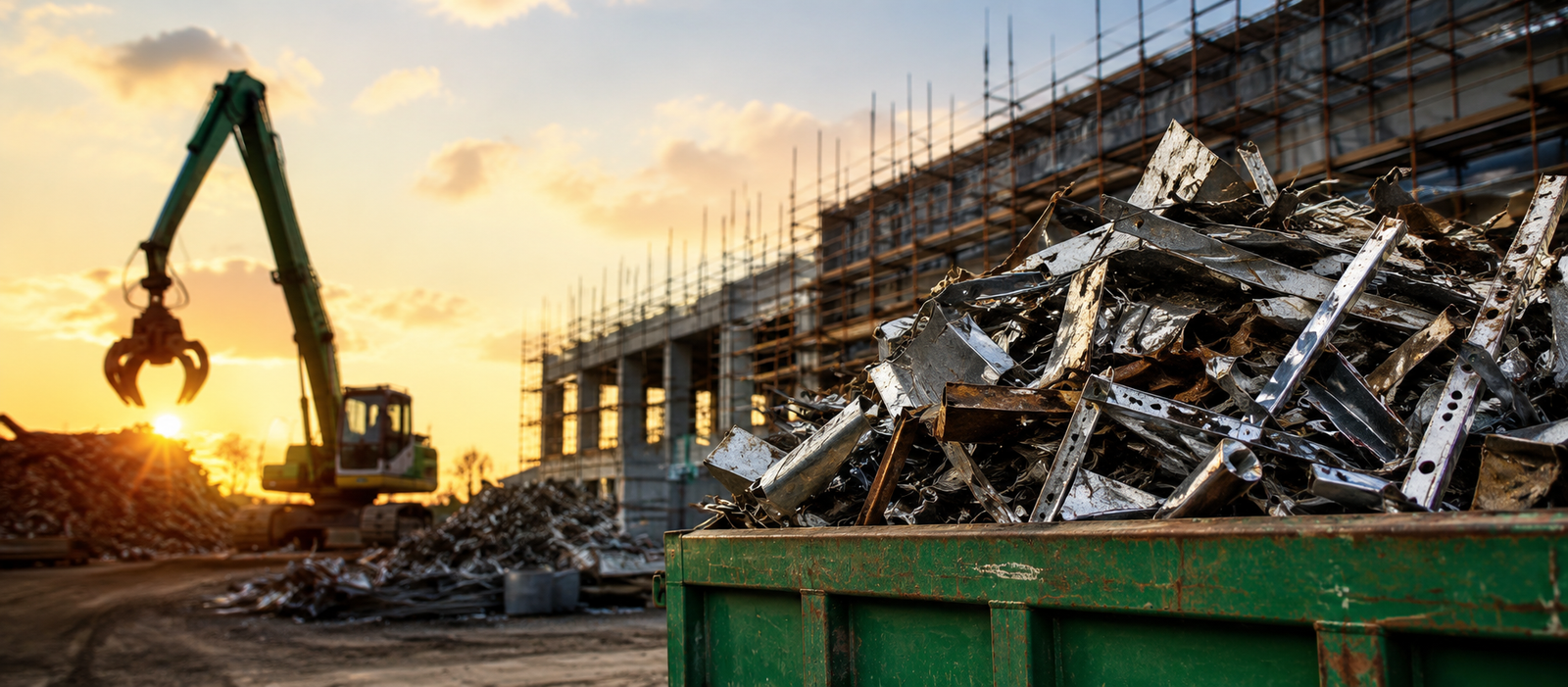
How to Manage Large-Scale Industrial Metal Waste Efficiently
Sustainable construction is no longer just a trend—it is a necessity. As the global construction industry continues to grow, so does its environmental impact. One of the most effective ways to reduce this impact is through metal recycling. From lowering carbon emissions to saving costs, recycled metal plays a crucial role in building a greener future.
In this article, we’ll explore why metal recycling is essential for sustainable construction and how businesses can benefit from it.
What is Metal Recycling in Construction?
Metal recycling is the process of collecting, sorting, and reprocessing scrap metal so it can be reused in new construction projects. Common recyclable metals include steel, aluminium, copper, and brass.
Unlike many other materials, metals can be recycled repeatedly without losing their strength or quality. This makes them highly valuable in construction, where durability and performance are critical.
Reduces Environmental Impact
One of the biggest advantages of metal recycling is its positive impact on the environment. Producing new metal from raw materials requires mining, transportation, and energy-intensive processing. These activities significantly increase greenhouse gas emissions.
Recycling metal, on the other hand, uses far less energy and reduces pollution. Studies show that recycling construction materials can avoid carbon emissions and save energy, making it a more sustainable option than landfill disposal .
Additionally, using recycled metals like steel and aluminium can cut emissions dramatically—up to 60% in some cases—helping construction companies meet sustainability goals .
Conserves Natural Resources
Natural resources such as iron ore, bauxite, and copper are finite. Continuous mining not only depletes these resources but also damages ecosystems.
Metal recycling reduces the need for raw material extraction. By reusing existing metals, the construction industry can conserve natural resources and protect the environment. This approach supports the concept of a circular economy, where materials are reused rather than discarded.
Reduces Construction Waste
Construction and demolition projects generate a significant amount of waste. Without proper recycling, much of this waste ends up in landfills, contributing to environmental pollution.
Metal recycling helps divert large volumes of waste away from landfills. Research shows that recycling construction and demolition waste provides better environmental outcomes compared to landfilling .
By incorporating recycling practices on-site, builders can maintain cleaner workspaces and reduce disposal costs.
Saves Energy and Lowers Costs
Recycling metal requires significantly less energy than producing new metal from raw ore. For example, recycled steel and copper can reduce overall production costs while remaining competitive in the market .
For construction companies, this translates into:
- Lower material costs
- Reduced waste management expenses
- Improved project profitability
Using recycled metal is not only environmentally responsible but also financially smart.
Supports Sustainable Building Certifications
Green building certifications such as LEED and Green Star encourage the use of recycled materials. Incorporating recycled metal into construction projects can help developers earn points toward these certifications.
This enhances the market value of buildings and attracts environmentally conscious clients and investors.
Promotes a Circular Economy
Metal recycling is a key component of the circular economy—a system where materials are reused, refurbished, and recycled instead of discarded.
In construction, this means:
- Reusing structural steel
- Recycling scrap from demolition sites
- Designing buildings for future material recovery
This approach reduces waste, lowers costs, and ensures long-term sustainability in the construction industry.
Enhances Industry Sustainability
The construction sector is responsible for a large share of global emissions and resource consumption. Adopting metal recycling practices helps reduce this impact while maintaining high-quality construction standards.
As cities continue to grow, sustainable practices like metal recycling will become even more important in shaping environmentally responsible infrastructure.
Conclusion
Metal recycling is a powerful solution for achieving sustainable construction. It reduces environmental impact, conserves natural resources, lowers costs, and supports a circular economy.
For construction companies looking to stay competitive and environmentally responsible, integrating metal recycling into their operations is no longer optional—it’s essential.
If you’re planning a project and want to manage your scrap metal efficiently, visit
👉 Boss Metal Group.